There are certain words that instantly change how the body feels.
TIA.
Stroke.
Neurological.
For many people, these words appear during moments of uncertainty — tingling, numbness, or sensations that feel unfamiliar. Even when doctors say “just to be safe,” fear can take hold long before results return.
How a TIA Typically Behaves
Medically, a transient ischemic attack (TIA):
• Happens suddenly
• Causes clear neurological changes
• Does not linger or fluctuate over months
• Requires urgent medical evaluation
It does not typically come and go repeatedly without progression.
Why Anxiety Can Feel Identical
Once the brain hears the word “stroke,” it begins scanning.
• Every sensation feels amplified
• Tingling feels threatening
• Normal variations feel suspicious
• The body stays in alert mode
Fear does not wait for confirmation. It reacts to possibility.
Why Normal Tests Don’t Always Bring Relief
Many people expect that a normal MRI or CT scan will instantly erase fear.
Often, it doesn’t.
Because anxiety is not resolved by information alone. It takes time for the nervous system to recalibrate.
When to Seek Medical Care
Always seek urgent care if you experience:
• Sudden weakness on one side
• Difficulty speaking
• Vision loss
• Loss of coordination
This article does not replace medical advice.
The Space Between Fear and Facts
Sometimes, symptoms are real — but the meaning attached to them is driven by anxiety rather than disease.
Understanding that distinction can reduce the cycle of monitoring and escalation.
I lived through months of medical testing while navigating this exact space between reassurance and fear. If this experience feels familiar, I explore it in depth in my book.
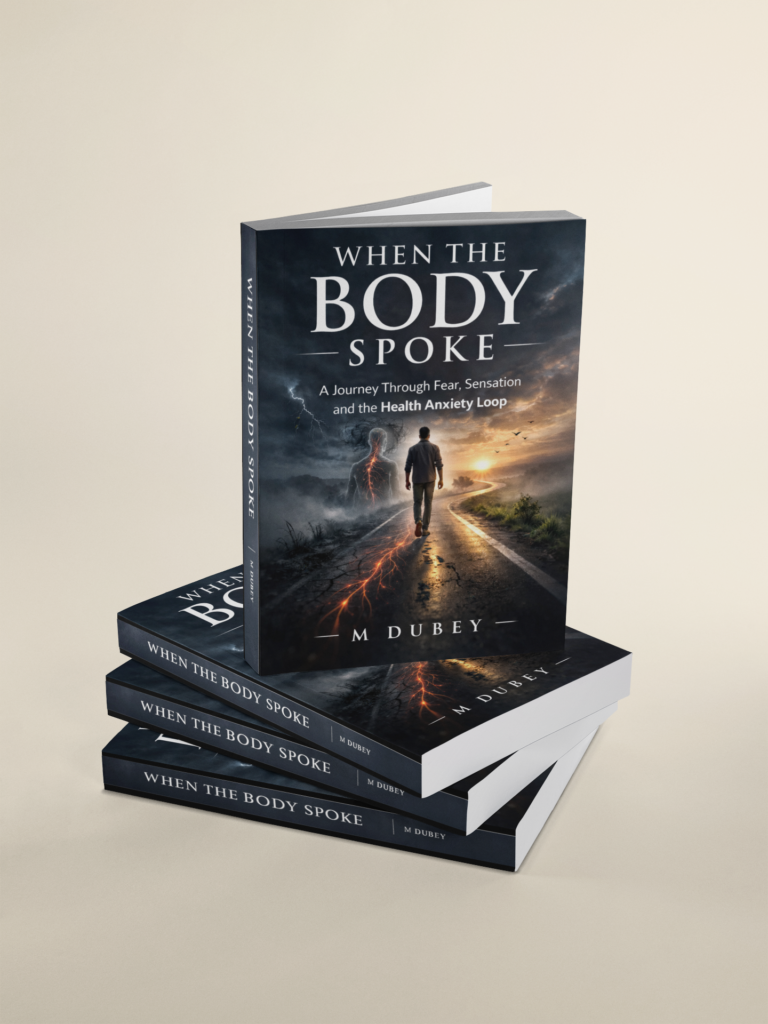
Who This Book Is For
- If you’ve had normal scans but still feel scared
- If sensations feel catastrophic
- If one word took over your mind-
- If you’re tired of Googling at 2 A.M.
Why I Wrote it
I thought I was having a stroke.
I wasn’t.
But the fear was real.